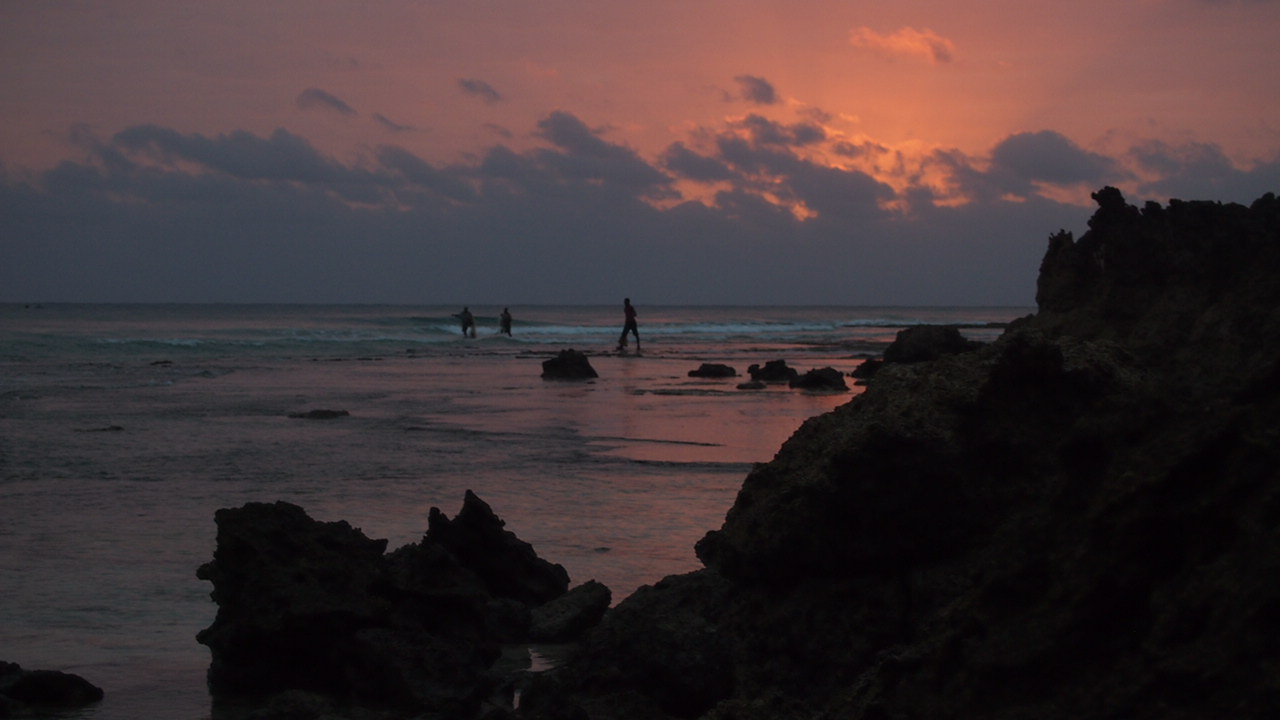
Saturday, August 17, 2013

Where has the Summer/Winter gone?

So, as usual when I finally get around to sitting down and writing out a blog post, I’ve realized that quite a lot of time has passed since I wrote my last post.  Two months in fact.  Epah!
In all fairness, it has been a busy couple months, what with traveling, conferences, visitors, saying farewell to old volunteers and welcoming new volunteers.

At the beginning of July, I was lucky enough to have the opportunity to go to Mbuna Bay, a resort on the Mozambican side of Lake Malawi (or Lake Niassa, if you are in Mozambique), with a handful of other volunteers and one of our Australian missionary friends.  Mbuna Bay is a luxury resort, with all the modern comforts of running water (hot and cold!), big fluffy beds, beautiful views, beachside gazebos, and wonderful, beautiful, delicious vegetarian food for every meal. While we were there I was able to go swimming, kayaking, spend amble amount of time reading in a hammock, celebrate the 4th of July with a few fellow Americans (and the lone Australian), drink a few beers while having a bonfire on the empty beach, and throw my sitemate Laura part one of her despedida.  What’s really cool about Mbuna Bay, however, is that it’s also very involved in the community – the owner is the wife of the former Swiss ambassador to Mozambique.  While living here, she fell in love with the people and decided to build a resort here.  Almost all of the staff are from the village (there are usually one or two volunteers from Switzerland handling the business side of things), the cottages are constructed of local materials in the same way Mozambicans construct their houses (but with many more amenities!), they work with community members to teach them skills (sewing, construction, etc) and sometimes English, and have invested in the little village – they’ve built a school, a community center, and a bridge so the village isn’t completely divided by a river during the rainy season anymore. 

The oh-so-beautiful Mbuna Bay!


After we got back from the lake (after much too short of a visit – it’s definitely a place I want to visit again and would recommend to anyone coming to Niassa!), we (aka, Laura, our health volunteer) received two trainee visitors from the new batch of health volunteers.  This is one of my favorite parts of training – about two-thirds through training, everyone gets sent off to different sites in Mozambique to visit with current volunteers to get a sense of what their work might be like, what sites can be like, and what they may or may not want out of their future sites.  And now that I’m a volunteer I like it because it means I might be able to see new people a couple times a year!  We also get to show off our site, which is exciting, since Lichinga is amazing.  We brought the visitors to our favorite restaurants (one is actually a restaurant, with pizza and burgers and sometimes ice cream, the others are a take-away stand with appas…which deserve their own post… and a food stall at one of the markets with excellent Mozambican food), showed them the sites in town (the reservoir, the crashed airplanes, our ‘fancy’ grocery stores that stock more than one brand of each thing), and fed them all sorts of things that you don’t get in training (eggplant parmesan, banana chocolate chip cookies, yogurt), before sending them back south to training and paved roads.

Our visiting trainees were only two of many visitors who passed through Lichinga between the end of June and the end of July – in total, in our house, we had nine during the month, with two more who stayed at Laura’s house (not including the trainees).  This is unheard of in northern Niassa – we are not on the way to anything and are extremely hard to get to.  By the end of the month I had hosted so many people that I was completely exhausted and a bit bewildered by all the people.  Of course, I had the lovely distraction (not quite a respite) of conferences to distract me by the time late July rolled around.

One of the more unfortunate parts of being an education volunteer is that it’s hard to travel outside of school breaks, but Peace Corps and secondary projects love to fill up school breaks with Conferences and Workshops.  This time around, I had two weeks of break…with two conferences to take up about half of my time off.  First I had the Niassa REDES Workshop – an annual event where all the REDES groups (or, part of all the REDES groups, thankfully) meet up in one city for a three-day conference about life choices, health (with a focus on HIV/SIDA and puberty), self-esteem, and, this year, how to run a business.  With a lot of singing thrown in.  A LOT.  This year the conference was in Mandimba (a centrally located town on the Malawi border) and we had 33 girls from 9 different groups through out the province, along with volunteers and Mozambican counterparts. The conference was a lot of fun and a big success – the girls learned a lot and had a great time – but it was also an astounding amount of work.  Since there were only a handful of volunteers and many things to get done, we spent most of the time running around buying food, fetching things for sessions, and trying to figure out where various people had wandered off.  As much fun as the conference was, I was glad when it was over and I could come back home for a few days of rest before our next conference the following week. 

Some pictures from REDES:


The second conference of my break was PDM – Project Design and Management – an official Peace Corps conference, which means it was held out of province, in a fancy hotel, with a pool, and a buffet, and internet!  So off I went with five of my site and almost-site mates and our counterparts – because PDM is for both volunteers and people we hope to be doing projects with in the future. My counterpart was a representative from União Associada dos Campesinos de Lichinga, a farming union that also does a lot of work with food sustainability, resource management, and a bit with conservation.  Other people brought students, doctors, fellow teachers, or people from the community.  The best things about PDM, for me at least, were that I was not involved in the organization at all, it was only two days long, and that Peace Corps paid for me to get out of my province – via airplane!  I was also able to see some volunteers from my training group who were placed in the central and southern regions of Mozambique who I hadn’t seen since swearing-in – an opportunity for catching-up, exchanging stories, and getting a nice dose of perspective on life in our little corners of Mozambique.

After PDM, I had several days before I had to be back in Lichinga to teach, so I took off traveling.  My friend Casey and I headed up to Pemba – provincial capital of Cabo Delgado and a lovely beach town – where we met up with our friends Nick and Jamie from training, as well as Nick’s parents who were visiting.  There were many lovely things about our three-day trip to Pemba – the beautiful beaches, seeing Nick for the first time since swearing in and Jamie for the first time since April, wonderful food, a few free meals courtesy of Nick’s parents (thanks again!), drinking wine and eating M&Ms with a few of my favorite people, our adventure of buying, transporting, presenting, and eating a full-sized Mozambican cake for Nick’s parents’ anniversary (yup, we bought a cake, and then took in on a chapa!) – but I think my favorite part were the dogs who lived at the hostel we stayed at.  There were three of them and they were unlike any dog I’ve seen since getting to Mozambique:  they were all fat and happy and extremely friendly. I hadn’t thought a dog could be fat in Mozambique!  By the morning after I arrived, we were all buddies and a couple of them even came along when Nick, Jamie, Casey, and I walked out to the beach one morning to watch the sunrise.  After leaving Pemba, we went back down to Nampula, where I was able to spend some time at a friend’s site, which I always find fascinating – they’re all so different – before I flew back to Lichinga to starting teaching for the third, and final, trimester of this year.

Some pics from Pemba - including the adorable puppies who quickly became my best friends!


A week and a half later, I’m back in the swing of things – teaching, having REDES meetings, playing with my animals (both are doing wonderfully – the cat as weird as every, the dog getting big and starting to acquire boyfriends, eek!), and walking around Lichinga and being told I’ve been disappearing a lot lately. Normal. 

This trimester for school I’m focusing on trying to fit a lot of material in a short amount of time – we have nine teaching weeks, including the first week when no one shows up and a handful of holidays that mean no school. But luckily I teach 11th grade and don’t have to worry about national exams!  

One of my classrooms the first week of school:


I’m also hoping to start really working with UCA (the farmer’s union) on some of their projects, or at least just hanging around to see what they’re up to.  REDES will be taking up quite a bit of my time for the next year, also, as I’ve been elected to the national board as Curriculum Coordinator – which means I’ll be working with the curriculums, editing and writing manuals, and incorporating feedback from the many different groups.  Because of this I’ll be heading back to Nampula in September for the Handover (where all the previous leaders help us figure out what it is we’ll be doing), where there is now a Shoprite! For those of you who haven’t spent much time in southern Africa, Shoprite is a chain of grocery stores – American-style grocery stores, with pretty much everything you could think of – including cheese and yogurt and cereal and dog food!  I’ll have to remember that everything I buy I have to carry on my lap for the 300 km chapa ride between Cuamba and Lichinga.  Also in September I’ll be brining my REDES group to the provincial English Theater competition – another Peace Corps secondary project where groups of up to 10 students write and perform and short play in English – so we’re spending the next month and a half working on that.  I’ve decided that means the time is ripe to teach them all a bunch of camp songs! You know, so they can practice their English!  Not at all just because I like singing camp songs…

Also during the past month, my sitemate Laura finished her service and headed back to America.  As she’s about to start graduate school at Harvard, it definitely was one of those ‘sad to see you go, but so excited for you!’ things.  Before she left, I was lucky enough to be able to be there for part of her despedida (goodbye party) with all of her Mozambican friends.  It was amazing to see the impact that she had had in just two years – there were so many people there who she had connected with or help or just hung out with during her service that were so sad to see her leave.  It made me realize that, in spite of the fact that we’re usually so focused on our projects – how many we have, what they are, what group of people they are helping – the most important part of our service is just being here, talking to people, making friends and sharing experiences.  Any organization can bring teachers, do studies, or form youth groups, the thing that is special about Peace Corps is that we live in the communities where we work, we only receive enough money to live reasonably – similarly to our neighbors, and we focus so much on integration. 

Last week our new health volunteer arrived – John.  It’s been fun to watch his reactions to everything and see his unhindered excitement about everything.  Instead of being fed-up by yet another random person stopping you on the street to have an unending conversation or someone stopping by your house to ask seemingly unimportant questions, he’s excited by it – it’s new, it’s interesting, it’s what he came here for.  It’s refreshing to see that enthusiasm – and it’s a bit contagious!


Áte proxima!


And no posting on the internet would be complete without a few animal pics:


Wednesday, June 19, 2013

After Cape Town Excitement (aka, back in Mozambique)

I’ve been back in Lichinga now for a couple weeks following the Gray Family Cape Town adventure and am approaching the 9 months in country mark, all of which has me thinking about all of the things that I find completely normal now that I didn’t when I first arrived in Mozambique and that my family found strange/interesting/confusing/different.  So during this blog post, I’m going to talk a bit about those small and not-so-small things that make life in Mozambique different from life in America.

First off, and most importantly, food!
Since arriving in at site, I’ve started eating more vegetables than I think I have ever before in my life – they are one of the cheapest and most readily available foods here.  Usually my fridge (oh, yes, I have a fridge!) is stocked with garlic, onions, tomatoes, carrots, couve (a dark leafy green in the mustard family), sweet potato and sometime with eggplant, green beans, peas, and avocado. 
As far as fruit goes, we currently have bananas, lemons, and oranges.  During the year mangos, guavas, papayas, and a few other unpronounceable fruits have their seasons as well.
Other staples include: beans, yogurt, tuna, eggs, pasta, bread, oatmeal, and peanut butter.
I occasionally splurge on cheese, bolachas (cookies), chocolate, ice cream (one of the bakeries has ice cream treats now! One of the most exciting days of my life), hot chocolate, and alcohol.

Anything that comes in packages (pasta, oatmeal, peanut butter, cookies, etc), I usually buy in a loja (or store).  The ones in Lichinga range from fancy ones with aisles and refrigerator cases to costo-esc ones where you have to stand in line at a counter and they give you dirty looks when you don’t buy in bulk to little lojas with just the few essentials.
Vegetables, fruits, beans, eggs, and anything else that isn’t processed, we buy at one of the local markets.  The markets in Lichinga come in two varieties: sheltered under a pavilion-type structure and open-air.  Both are comprised of many, many stalls run by mamas with their current haul of produce from the family machamba (or farm).  Produce is sold either in lugares (small piles of 3-5) or copos (cups).  Things generally range from 5 – 20 meticais per lugar and 8 – 20 meticais per copo (30 meticais = 1 American dollar).

My typical meals are egg scrambles, tuna salads, pasta, soup, peanut butter sandwiches, and anything I can mix with yogurt.  I generally opt for simple options, since complicated meals mean more dishes and more cleaning without running water – which, as it turns out, is rather a large pain.

Which leads into another very important part of my life – my house!
As far as accommodations go in Peace Corps Mozambique, Jade and I hit the housing lottery – our house is old Portuguese construction, which means it’s solid, large, and features a drop-down ceiling that keeps the hot our and the rain quiet.  It features a living room, three bedrooms (one serves as a very large closet currently), an indoor bathroom (blessing and a curse), a kitchen, and a lovely, spacious back yard.  The kitchen is probably my favorite room (as kitchens usually are) – we have a full-sized refrigerator and freezer and a gas range, so I don’t have to sacrifice my baking while here, and a sink…that doesn’t have running water.  That’s right – no running water on our property!  But we do have electricity, so that’s a win. The reason why I have mixed feelings on the bathroom is precisely because of the no running water – we have an indoor toilet, which is nice when you have to pee in the middle of the night, but incredibly unfortunate when water is low and it needs to be flushed.  That’s right, to flush our toilet you have to dump a bucket of water down it.  And, since we don’t have running water, our showers are just pouring pitchers of water (heated on the stove) over ourselves from a bucket. Makes washing long hair very tricky.  The back yard is, like I said, beautiful, and a bit of an orchard – we have a mango tree, a few papaya trees, a guava tree, and a couple of peach trees! 
To keep ourselves sane, we hired an empregada (or maid)…well, more so we inherited her.  Her name is Lurdes and she comes twice a week to help us incompetent brancas carry water form the well down the street, do our laundry (by hand…definitely an acquired skill that I haven’t acquired) and some general cleaning around the house (somewhat unnecessary, but helps when it comes to balancing different opinions on house cleanliness between roommates).  Occasionally she can’t come one day, or we’ve had a lot of people over for the weekend, and we run out of water and have to cart it ourselves.  Not only is water heavy, and annoying to try to carry in large buckets, the well that we use happens to be down the street…that is, the main street in and out of Lichinga, that’s always busy, and always has crianças (little kids) and mamas around to comment on the process.  One of the funniest parts of last weekend was when we were carrying a bucket with about 30 liters of water past a group of crianças who first said we were strong (yeah!  The brancas aren’t inept after all!) and then suggested that we carry the bucket on our head…keep in mind, I could probably fit in this bucket.  Silly crianças!

Right next to our house is the school we work at E.S. Paulo Samuel Kankhomba – pro, short commute; con? All the students know where our house is and like to stop by to ask us questions randomly.

I am teaching 11th grade biology this year – I have to turmas (classes) that each meet twice a week – an hour and a half one day and 45 minutes another – and are comprised of between 90 to 110 students.  Luckily (or sadly, depending) not all the students come to class every day.  The classrooms I teach in are fairly small (one of the reasons it’s lucky not all of the students come every day), without electricity, with a eclectic collection of half-broken desks that appeared halfway through last trimester (before that, students either brought chairs or sat on the floor), and are 50/50 when it comes to doors.  I’m pretty sure the rooms were storage until the school admitted too many students this year.  However, as a nice balance to my challenging teaching space, the school has an absolutely beautiful science lab – well stocked with physics, chemistry, and biology supplies.  I haven’t ended up using this resource too much yet, but am hoping to figure out a way to get smaller groups of students in every once in a while.

Since I only teach twice a week (six hours total), I’ve ended up with a lot of free time.  Some of this has gone toward secondary projects (my REDES group, the English group I’m trying to get started, and my ongoing crusade to find a conservation-focused organization that would find me useful) and a fairly large chunk has gone towards cooking (nothing is pre-made, or in the just-add-hot-water! family, so cooking takes more time). 
My leisure time is generally spent reading (kindles are the best thing ever for Peace Corps – anyone who’s headed out soon, definitely consider investing), watching movies and TV shows on my new, functional computer (thanks Mom!), hanging out with other ex-pats, and watching my pets do whatever they feel like doing on a given day.  Lichinga is full of ex-pats – apparently being the provincial capital in the poorest province in one of the poorest countries in the world will do that.  There are quite a few missionaries that we spent time with – some Australians and a couple from Texas.  Lichinga is also known for its forestry, so there’s a lot of people here working on the tree farms.  We’ve met a few of the guys who work for one company – a couple Swedes, a Portuguese guy, and a guy from Zimbabwe – and hung out with them a couple times.  There’s an interesting difference in purpose between the people who are here with a service focus (the missionaries, us as PCVs) and the people who are here just for a job.  One of the biggest things that I’ve noticed is a difference in the importance of the opinion of the Moçambican community – our time here is all about integrating with the local community, they are the people we work with and their opinions are incredibly important, whereas the forestry guys are more isolated (many live on the company’s compound outside of town) and seem to find interactions with the community here in Lichinga much less important.  Food for thought.
And then there are our pets – Matope, the puppy, and Maningue, the cat.  They are probably the best form of entertainment we have.  We will honest-to-god spend an entire afternoon just watching the cat trying to attack a bug on the wall, or the dog attacking the cat…or her new turtle chew toy that my aunt and uncle sent over for her.  We may just be easily amused after almost 9 months in Mozambique or we may now have a better sense of what is actually entertaining.  Who can tell?

The next month at site is going to be a busy one – the next round of provincial final tests and grading the provincial tests, the provincial REDES workshop with girls from 8 groups throughout Niassa, my site mate Laura’s despedida at Lake Niassa and her COS a couple weeks later, helping an ORG out with a grant proposal (which will hopefully lead into me working with them!), and, finally, another Peace Corps conference at the end of July – PDM (Project Design and Management) where I will learn all about how to apply for grants from everyone.  Hopefully there will be some traveling before or after the conference – still haven’t seen as much of this beautiful country as I would like.

Ate mais tarde!

Monday, May 20, 2013

Spring Forward


I started this blog with the best intentions of actually posting on it. That hasn't really happened all that much. I chose to blame it on the fact that back in November my computer decided to start acting like Marvin the manic-depressive robot (meaning, it's doesn't really work properly, except when it decides it wants to, sometimes, for about twenty to thirty minutes), because typing on a computer where you can't see what you are writing isn't much fun. Didn't seem like much of an issue when I first got to site (settling in is not that thrilling of an affair), but things have been picking up in the past couple months, so I'm going to try to post a bit more frequently.
For starters, what have I been up to the past several weeks?
April started off with final exams and a LOT of grading – two weeks that were the definition of hectic. To balance out the absurdity of finals in Mozambique, we luckily had a few distractions. First off, we had our first visitor from out of province in 4 months – my friend Andrea from training, who made it all the way up from Manica province – and April 7th is Mozambican Woman's Days, so off we all went in our capulanas to party with the professoras from our school, Kankhomba.
After finals and grading (which is the absolutely the worst), off I went to Nampula for a week and a half of Peace Corps conferences. Two days of travel (first by chapa and then by train – which is the best drive through ever), landed six Mozambican women, my fellow PCV Jamie, and me in Monapo for a REDES training of trainers conference (REDES is a Peace Corps project that focuses on empowering young girls through a small-group environment). We spent the weekend in Monapo talking about how to effectively communicate with the young girls, practicing the sort of sessions we will be giving in our groups, and fafoca-ing (gossiping) with our Mozambican counterparts. After three days of girl time, my fellow Moz 19-ers and I headed back to Nampula City for our Reconnect conference – a week of running water, fancy food, and endless sessions about our successes, challenges, teaching and integration methods. It was great to see other PCVs for the first time in months, exchange horror stories and amusing anecdotes, and speak nothing but English for a few days. Also, there was a pool. We're pretty easy to please after four months at site. During the conference, all of us had limited patience for the sessions, but between all the sharing, there were a few good ideas that came out.
So, off I went back to Lichinga, ready for the new trimester and trying all sorts of new things in the classroom. But, we're in Mozambique. I didn't actually get to teach until two weeks after the trimester started – after being informed that I have four student teachers for the first half of the trimester. After a bit of confusion about what exactly we were all supposed to do, they started teaching this past week and will continue teaching until the end of their semester in mid-June. Leaving me with an absurd amount of free time.
This weirded me out at first – I was just ready to really give teaching another go when I suddenly learned that I won't be teaching until the end of the trimester. Uff da! What's a PCV to do without a primary project? Focus on secondary projects!
I'm finally starting to get my REDES group started – we had our first official meeting yesterday. Only four girls attended, but they all seem interested and want to do something involving theater. Since acting isn't my strong suit, I'm going to try to get my hands on some Portuguese-language movies – as inspiration.
I've also started talking with a couple ORGs based in Niassa who do conservation work – the Niassa Carnivore Project, which works on improving human/carnivore interactions in the game reserve in northern Niassa, and World Wildlife Fund, who are working up at Lake Malawi establishing a reserve. I'm still unsure of what I might do with WWF, but it's looking like I'll work with the NCP teaching income-generating activities to groups in the reserve – specifically how to make peanut butter to women! Yummy!
Jade and I are also starting up a sort of 'science study hall' for the students at our school where we'll talk about different topics in science, help kids study for their classes, watch documentaries (mostly because I want to), and do experiments!
And I'm in the planning stages of an English club for the Professors at our school. It's typical for volunteers to have English clubs – either with students or in the community – but enough of the PCV English teachers have mentioned how few of their colleagues speak English all that well, so I thought having a club for the professors to practice their English and be better equipped to teach their students would be a bit farther reaching. Also, they speak English already, which makes my job a lot easier!
So these are my focuses for the next few months, weaving teaching back in there once I don't have student teachers to do my work for me.
All of that gets to wait for a couple more weeks, though, as this coming weekend I'm off to Cape Town to meet up with my family! A whole week of family, food, wine, cheese, showers, and adventures in an English-speaking country! Sounds like heaven. The roads might even be paved!

Ate a minha volta!

Saturday, March 30, 2013

Mato vs Rural


After being in Mozambique for a while, I’ve noticed a big difference between non-urban areas here and non-urban areas in the states.  Mostly in that, when we say ‘rural’ in the states, we mean there is absolutely nothing.  No people, no buildings, maybe a railroad, cow, or oil well, but really not much else.  Mozambique is a bit different.  When you’re in ‘rural’ Mozambique (aka, the mato), there are people, maybe a lower density than in urban areas, but definitely people and the obligatory mud/cement/grass huts and machambas (farms) scattered across the countryside.  But that’s it.  No stores, no running water, no electricity, maybe cell service or something that could be considered a road.
Rural areas in the two countries have opposite characteristics: in the states, rural means no people, but there’s still infrastructure (roads, electricity, phone lines) while in Mozambique there’s people without the infrastructure.
Not sure what this says about the route and rate of development of the two countries, though it probably says something, I just found it to be interesting. 
It also means that when you try to go hiking into the mato, you get a lot of confused looks from locals who then shout after you in ciyao (one of the local languages), the only word you can usual understand being ‘mazungo’ (meaning ‘white person!’).

Sunday, March 3, 2013

Menagerie

A few weeks ago, Jade and I adopted two kittens (brothers, offspring of sitemate Laura's cat Coiso) and a puppy that our friend Dias found for us. Our house is now a menagerie. Which has its pluses and minuses.
One of the biggest perks of having three cute baby animals running around is that there are three cute baby animals running around who are always available for cuddles and entertainment (watching the kittens trying to jump/climb onto various objects can occupy an hour easily). One of the downsides is that, every morning between six and seven I get woken up by a chorus of hungry baby animals who are all much more wide-awake than I am...and pretty good at confusing me. This morning, for instance.
I tossed all the animals outside when I woke up because we were out of xima and I didn't want to deal with their screaming while I made more. Making breakfast took about ten minutes, when it was ready I let the babies back inside. However, only two of the three ran inside. I just figured the other one had wandered off to adventure, so I dutifully fed the other two. Once that was done I went looking for the third, because I could definitely hear him meowing, even if I couldn't see him. Pre-caffeine me was pretty confused. Then I realized that the meowing was coming from above my head. One of the kittens hand managed to climb up the grate over our back door and ended up in the gutter...but he couldn't figure out how to get down. After a few minutes of fussing, he was back on the ground, safe, and eating breakfast. Epah. Kittens.

The puppy we named Matope, which means 'mud' since he's about the same color. The kittens are Meningue and Gil.

Tuesday, February 26, 2013

The 'branco' connection

Today, we made a new friend. His name is Charles and he works up in the Niassa Reserve - the really interesting, really hard to get to place. He also is very friendly and very generous and is offering to bring us up for a week or two sometime. You know, just to chill, see some animals, and maybe go on a raft trip with him.
There was a lot of excitement and shouting with joy in our house after he left.

Oh, and he also knows the people working on he Niassa Carnivore Project...and said he'd introduce me.

Today was a good day.
Now hopefully I'll go to bed early and maybe get rid of this cold that's been bothering me for the past several days.

Sunday, February 24, 2013

LAchinga

This past week was a bit difficult. Not really sure why, but I figured out part of it was that I really am living in LAchinga, meaning, really, really far away from everything not Niassa. It takes two days to get out of the province and the better part of a day to get to most places in the province. Starting to feel a bit isolated.
BUT, a perk of Lichinga (since it's the provincial capital) is that I have pretty excellent cell service and fairly reliable internet. So instead of moping about how difficult it is to visit other volunteers, I'm going to take advantage of those perks and try to just talk to other PCVs more. Also, post on this blog more, so I feel like less of an abstract off here in Mozambique to everyone back in the states.
My goal? One (small) post each day this week, to get me in the habit of writing on here a bit more. Might also try to figure out the whole 'comments' thing that people have mentioned to me.

And on a different note, epah! It's almost March! I've been in Mozambique for about five months already!

Oh, and the kittens and puppy say 'hi'
Discovered last night that xima with pumpkin mixed in is apparently passing pet food, so with half our quintal covered in abóbora plants, I don't think we have to worry too much about feeding the animals!